欢乐喜剧人
Nanjing Massacre memorial hall receives new evidence of Japanese invasion on 81st anniversary of Japan’s surrender_我的网站

A | 盛夏高温热浪来袭暴雨雷雨轮番登场天气多变,安全隐患多发高温潮湿的环境不仅容易损坏彩票也给福彩销售站点的运营带来消防、防汛、设施安全等多重风险这份夏季福彩安全实用指南彩民和站主都要看彩民必看!夏季这样保存彩票才不会失效福利彩票采用热敏纸印制,材质怕高温、强光、水渍,保管不当会出现字迹模糊、票面破损,直接丧失兑奖资格。

B |
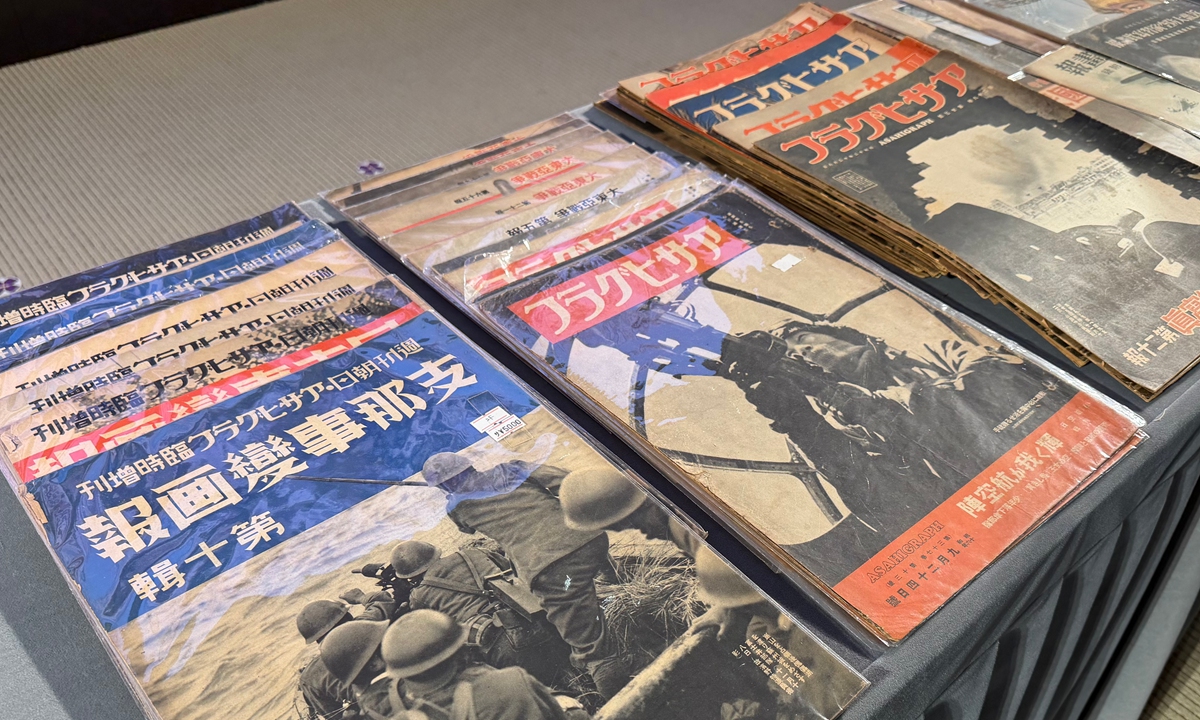
Illustrated materials related to Japan’s invasion of China, brought back from Japan by Marcus Detrez and Zhong Haosong, are displayed at the Memorial Hall of the Victims in Nanjing Massacre by Japanese Invaders in Nanjing, East China’s Jiangsu Province, on August 15, 2026. Photo: Shen Sheng/GT
August 15 this year marks the 81st anniversary of Japan’s unconditional surrender in World War II. A ceremony themed “Nanjing Will Never Forget” was held on Saturday at the Memorial Hall of the Victims in the Nanjing Massacre by Japanese Invaders in Nanjing, East China’s Jiangsu Province.
At the ceremony, a batch of newly acquired artifacts, historical materials, and documents related to the War of Resistance Against Japanese Aggression, including Japanese soldiers’ private letters, wartime postcards, educational materials on gas warfare, news compilations and French diplomatic archives, was officially added to the memorial hall's collection.
Overseas‑sourced historical archives drew wide attention among the donated materials. French youth Marcus Detrez, his compatriot Bastien Rata and Chinese youth Zhong Haosong jointly donated a set of historical documents on Japan’s aggression against China from the French diplomatic archives in Nantes, as well as Japanese‑language materials they had collected in Japan.
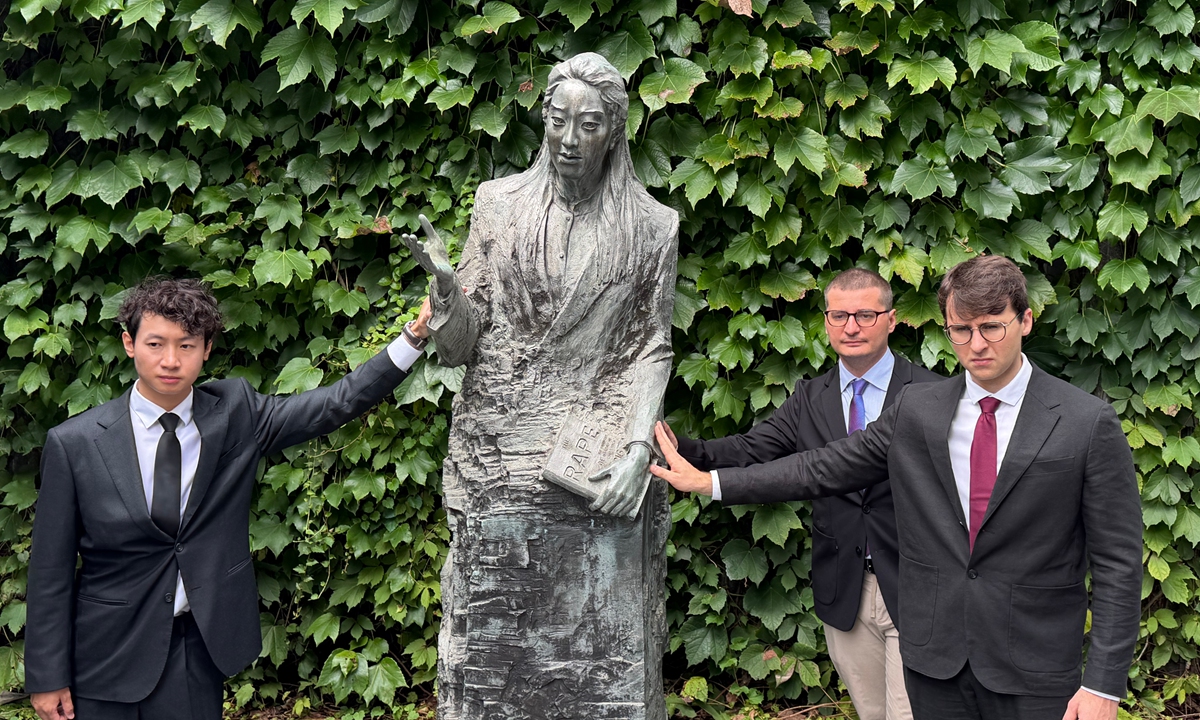
Zhong Haosong (left), Bastien Rata (center) and Marcus Dretz (right) visit the Memorial Hall of the Victims in Nanjing Massacre by Japanese Invaders in Nanjing, East China’s Jiangsu Province, on August 15, 2026. Photo: Shen Sheng/GTAccording to Bastien, the French diplomatic archives brought back this time total 891 pages. They are organized by province and cover wartime historical events in Nanjing, Shanghai, Guangdong and other areas. The archives document relevant situations during Japan’s invasion of China, while also preserving observations by French diplomatic personnel on Chinese society during the wartime period.
Marcus told Global Times on Saturday that, through these archives and related research, they have gained a deeper understanding of the brutality of the Nanjing Massacre. He said that collecting these materials was also aimed at conducting more educational work to help more people learn about this period of history.
The materials brought back from Japan by Zhong include albums of documentary paintings of the Japanese invasion of China by artists accompanying the invading Japanese army, privately taken photo albums of the invading Japanese troops, and original publications from the same period, including the Asahi Shimbun. These materials all come from original Japanese records.
The overseas historical materials were collected over an extended period. Zhong said they contacted sources online and searched through antique and secondhand book channels while continuing to collect materials in Japan.
The new collection on Saturday also includes materials gathered by Chinese youths. High school student Yu Ningpeng and Xu Weizhe donated 12 private letters written by a soldier of the 20th Regiment of the Imperial Japanese Army’s 16th Division, documenting his experiences during the invasion of China. One letter, dated December 20, 1937, contains accounts related to the Japanese occupation of Nanjing.
Meng Guoxiang, a researcher at the Institute for National Memory and International Peace Studies, told the Global Times at the event on Saturday that historical research places great importance on the sources of historical materials, with original archives holding significant value.
Some of the materials donated this time were records left by the perpetrators themselves, while archives from third-party countries such as France provide another perspective, Meng said, adding that cross-checking materials from different sources can help build a more complete body of evidence.
Notably, alongside the handover of the latest batch of archival materials, the memorial hall also held a ceremony to induct the fifth group of inheritors of the historical memory of the Nanjing Massacre. Six people were named as the latest inheritors, including descendants of Nanjing Massacre survivors, descendants of eyewitnesses, and descendants of international friends. They help pass on historical memory through family traditions, educational activities and efforts to raise public awareness of history.
In recent years, a growing number of post-1990s and post-2000s private collectors, as well as foreign nationals, have joined efforts to collect historical materials, a trend that has deeply moved and impressed Zhou Feng, curator of the Memorial Hall of the Victims in Nanjing Massacre by Japanese Invaders, he told the Global Times.
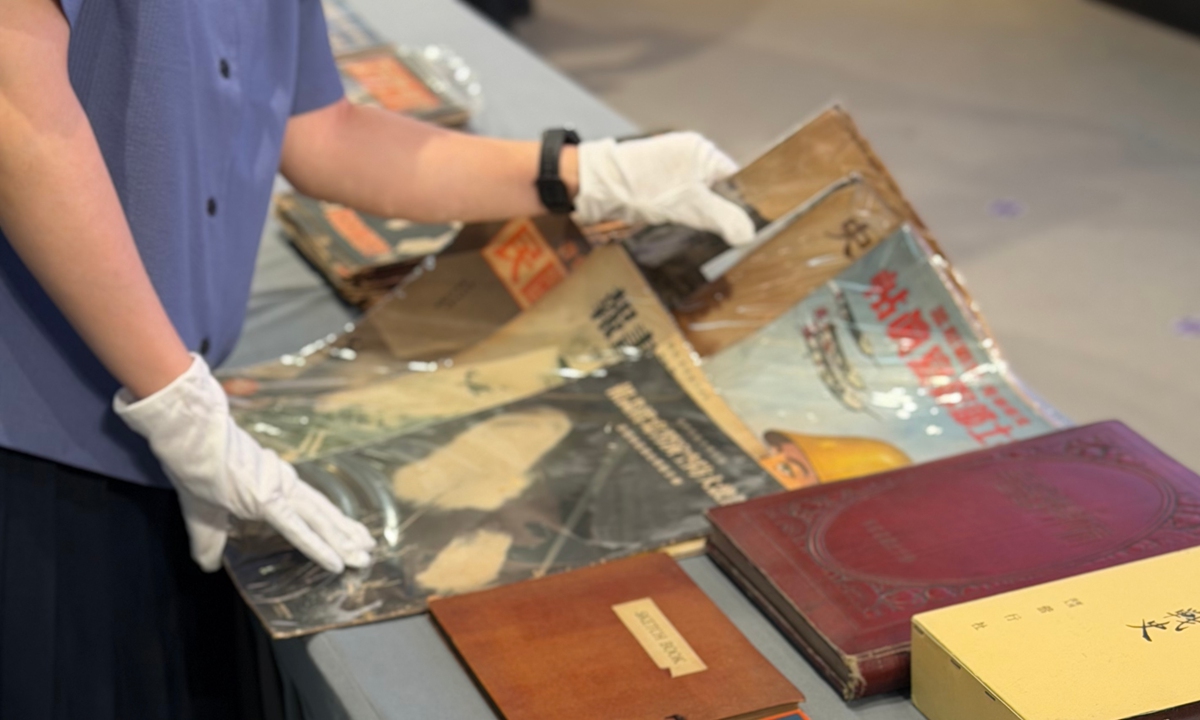
A staff member arranges archival materials documenting Japan’s invasion of China brought back from Japan by Marcus Detrez and others at the Memorial Hall of the Victims in Nanjing Massacre by Japanese Invaders in Nanjing, East China’s Jiangsu Province, on August 15, 2026. Photo: Shen Sheng/GT
Zhou said that preserving history and historical records was once widely seen as the responsibility of museums, cultural institutions and professional scholars; however, today, more and more private collectors are taking the initiative, spending their own money to collect historical materials scattered across China and overseas.
Historical memory, he said, needs to be passed down from one generation to the next. The donors come from different generations, nationalities and backgrounds, but share a common respect for historical truth and commitment to justice.
Since the beginning of this year, the memorial hall’s Nanjing Massacre Documents Center has launched a global campaign to collect relevant historical materials, receiving support from various sectors both in China and abroad. Nearly 100 donors from China and overseas have so far contributed materials to the memorial hall, Zhou said.
。1.避光隔热存放:切勿将彩票暴晒、放置空调外机、高温台面等热源旁,收纳在阴凉干燥避光处,防止票面文字淡化消失。2.洗衣前仔细检查:夏季换洗衣物频繁,彩票容易遗落在口袋被水洗泡烂,收纳至卡包、抽屉等固定位置,清洗衣物前务必翻查口袋。3.受潮正确处理:雨天彩票沾水、受潮后,禁止明火烘烤、热风直吹,放置通风处自然风干,最大程度保留票面完整。
站主必学!夏季福彩站点安全运维攻略夏季用电负荷高、极端天气多发,消防安全、防汛防灾、设施排查三项工作缺一不可!1. 严守消防安全底线定期检修电线、插座、投注机等用电设备,更换老化线路,禁止私拉电线、线路缠绕堆放;按标准配齐灭火器,熟练掌握使用方法。

C | 每日打烊做到人走断电,消除火灾源头隐患。2. 提前做好雨季防汛日常关注气象预警,提前储备沙袋、防水布等防汛物资;暴雨来临垫高设备、遮盖彩票,防止雨水倒灌浸泡物资与机器。遇极端恶劣天气,及时关停门店、人员撤离,安全优先。3. 常态化排查户外设施定期检查门头、灯箱、LED 显示屏、门窗墙体,及时维修松动、破损、漏雨构件,杜绝高空坠物、设施倒塌、屋内渗水等安全事故。夏季安全无小事用心保管彩票就是守住自己的每一份幸运权益抓实安全防控就是筑牢经营安全防线做好防潮、隔热、防火、防汛各项防护安心购彩、稳妥经营!。
Current article:http://sdx5.zongchaeiwengshuabaisisuofu.sbs/list_77f/29u.html
Published on:21:02:47


